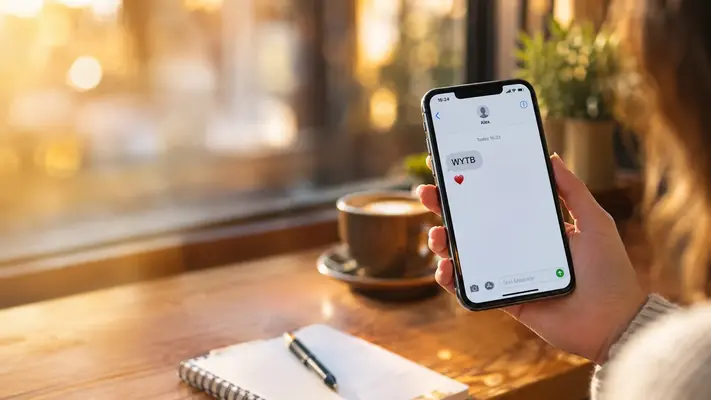
Someone just texted you “WYTB,” and you can’t tell if it’s a warm gesture or a polite brush-off. You’re not alone. Three letters can carry very different feelings depending on who sends them and when.
This tutorial explains the true meaning of WYTB, its tone, and how to respond to it. By the end, you’ll know when it’s genuine kindness and when it’s a quiet goodbye.
What Is the WYTB Meaning in Texting?
WYTB stands for “Wish You The Best.” People use it in texts, DMs, comments, and social media captions to send good wishes. It works as shorthand for a full sentence.
Most of the time, it’s friendly. A coworker might send it before your big presentation, or a friend before your exam. Those messages are sincere and short.
The catch is context. The same three letters can also close a conversation, especially after a breakup or a falling out. Because of this, the message is never limited to the letters.
WYTB Full Form and Origin
Like LOL, BRB, and IDK, WYTB grew out of text-message culture. People wanted faster ways to type and found that initialisms save time without losing the message.
No single person invented it. It spread through chat apps, gaming lobbies, and comment sections. Today it shows up on Instagram, Snapchat, WhatsApp, and Discord.
How to Pronounce and Write It
You say it letter by letter: W-Y-T-B. Most people type it in capitals, though lowercase “wytb” is just as common in casual chat.
To set the tone, some people use emoticons or punctuation. “WYTB!” feels warm, while “wytb.” feels cooler. Pay attention to those small signals.
Quick Facts Table
| Detail | Info |
| Abbreviation | WYTB |
| Full form | Wish You The Best |
| Type | Texting slang / initialism |
| Common platforms | WhatsApp, Instagram, Snapchat, Discord, TikTok comments |
| Usual tone | Friendly, polite, sometimes final |
| Formality | Casual |
| Best use | Informal good wishes |
| Avoid in | Formal emails, cover letters, official notices |
When People Use WYTB
Context decides the WYTB meaning every single time. Below are the three situations where you’ll see it most.
1. Sending Genuine Good Luck
This is the happiest use. A friend has an interview, a driving test, or a first day at a new job, and you want to cheer them on without typing a paragraph.
Example: “Your interview is tomorrow, right? WYTB!The sender intends for the message to be brief and heartfelt.
2. Ending a Conversation Politely
Sometimes WYTB works like a closing door. Someone who wants to stop talking but doesn’t want to start a fight may type it as the last message.
You’ll often see this after a disagreement or when a relationship is winding down. The words are kind, but the energy behind them says “this is where we stop.”
3. Wishing Someone Well After a Breakup
Ex-partners often use WYTB to leave things civil. It says “no hard feelings” while quietly marking the end of the road.
If you get this from an ex, read it as closure rather than an opening. Replying with a long emotional message rarely goes well.
How to Tell If WYTB Is Sincere or Cold
You can read the tone from clues around the message. Look at these four signals:
- Timing: A message sent before your big day usually feels sincere. One sent right after an argument usually doesn’t.
- Punctuation: Exclamation marks and emojis suggest warmth. A flat period suggests distance.
- History: If this person is usually chatty and suddenly goes short, something changed.
- Follow-up: Warm senders keep the conversation going. Cold ones stop talking.
No single clue proves anything, so weigh them together. When in doubt, ask yourself how this person normally texts.
How to Reply to WYTB
Your reply should match the sender’s tone. Here are seven options that work.
For Friendly Messages
- “Thank you, that means a lot!”
- “Appreciate it! I will keep you informed about its development.”
- “Thanks! WYTB too!”
These keep the exchange warm and open. The third one returns the kindness in the same shorthand.
For Cold or Final Messages
- “Thanks, you too.”
- “Appreciate that. Take care.”
Both are polite and both leave the door closed. You don’t owe a long answer to someone who has already ended the conversation.
For Work Chats
- “Thanks, I appreciate the support.”
- “Thank you! Looking forward to it.”
These stay professional and don’t mirror the slang. If a manager or client sends WYTB, a clear sentence is the safer reply.
WYTB Meaning vs Similar Abbreviations
People mix WYTB up with other short phrases. Here is how they differ:
| Abbreviation | Meaning | Tone |
| WYTB | Wish You The Best | Warm or final |
| GL | Good Luck | Cheerful, quick |
| TC | Take Care | Gentle, caring |
| BTW | By The Way | Neutral |
| HMU | Hit Me Up | Open, inviting |
| GLHF | Good Luck, Have Fun | Gaming, playful |
The big difference is emotional weight. “GL” is light and almost always cheerful. WYTB carries more feeling, which is why it can also mean goodbye.
Is WYTB Rude?
No, WYTB is not rude by itself. The words are kind, and most people send it with good intentions.
It can feel cold when it replaces a real conversation. If you expected a heartfelt reply and got three letters, the message may sting even though nothing in it is mean.
If you’re the sender, add a few extra words when the moment matters. “WYTB, you’ve earned this” feels far more personal than the initialism alone.
Where You Should Not Use WYTB
Slang is not everyplace, but it has its place. Skip WYTB in these situations:
- Job applications and cover letters
- Formal emails to professors, clients, or executives
- Condolence messages
- Official announcements
- Messages to older relatives who may not know the abbreviation
In these cases, write “I wish you the best” in full. It reads as respectful, and nobody has to decode it.
Other Possible Meanings of WYTB
The standard WYTB meaning is “Wish You The Best,” and it covers the vast majority of messages you’ll see. But initialisms can shift in niche communities.
In a gaming server, a private group chat, or a fan community, the same letters may stand for an inside joke or a phrase specific to that group. If the context doesn’t fit, ask the sender directly. A quick “wait, what does that mean here?” saves confusion and awkward guessing.
Tips for Using WYTB Well
A few habits make your messages land better:
- Match the person’s style. If they text in full sentences, don’t answer in slang.
- Add a name or detail. “WYTB, Sara!” feels warmer than a bare abbreviation.
- Pair it with a reason. “WYTB on the exam, you studied hard” shows you paid attention.
- Save it for moments that matter. Overusing it makes it feel automatic.
Final Verdict
Now that you know the WYTB meaning, you can see how much range three letters can carry. It can cheer you on before a big day or quietly close a chapter, and the letters never tell you which.
Read the timing, the punctuation, and the person’s usual style before you decide what it means. Then reply in kind, and when your own message matters, spend a few extra words. A little effort makes “wish you the best” feel like you mean it.