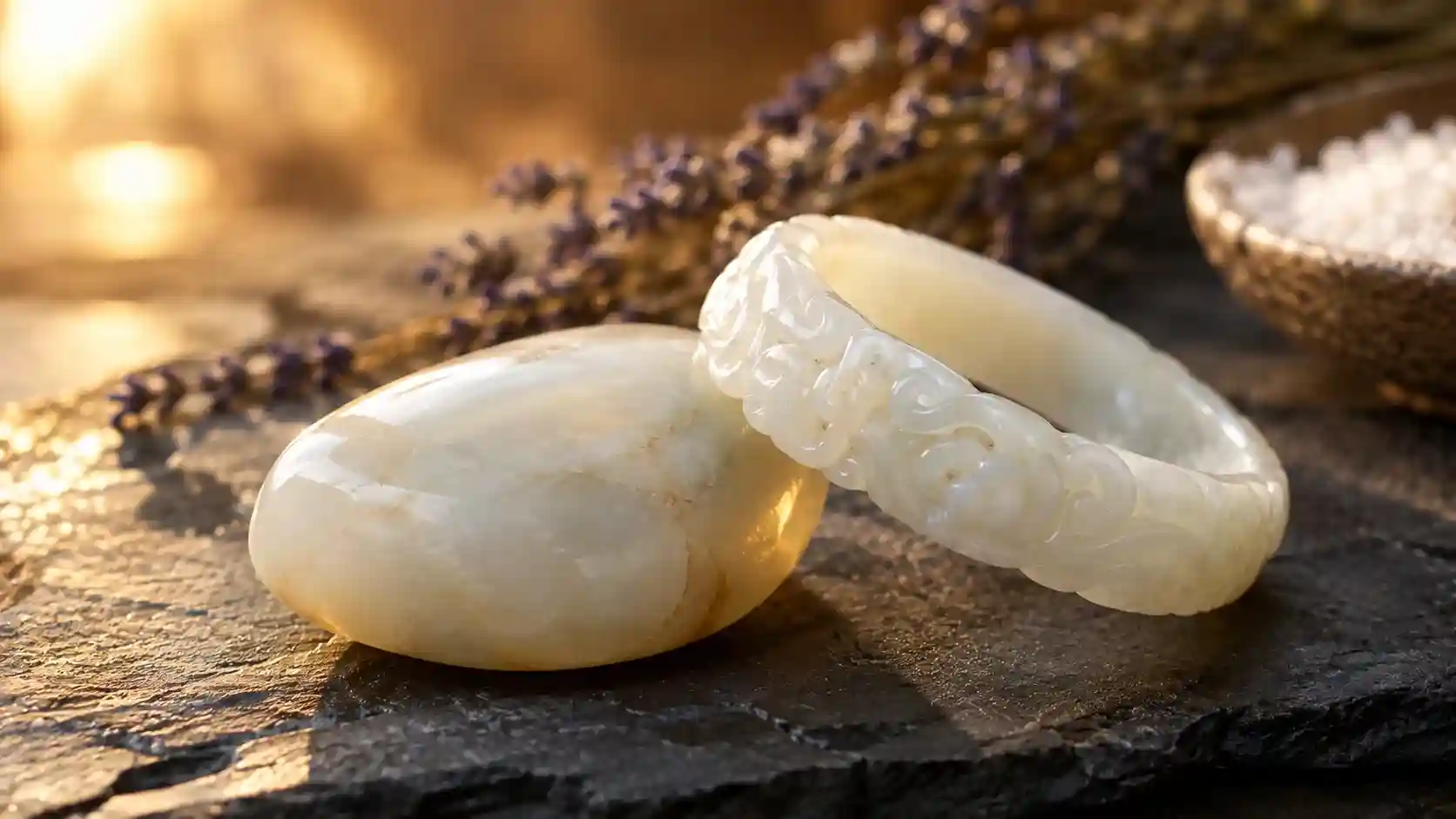
Feeling scattered, stressed, or disconnected from your own calm? Many people search for answers in the wrong places and end up more confused than before. The white jade meaning offers a simple starting point: purity, clarity, and quiet strength that has guided healers and emperors for over 5,000 years. This guide breaks it all down in plain language, so you finish reading with real answers, not more questions.
What Does White Jade Actually Mean?
At its core, the white jade meaning centers on purity, peace, and mental clarity. Unlike louder, more dramatic crystals, white jade works quietly. It doesn’t shout for attention; it settles a busy mind the way a still lake settles a restless sky.
People who study crystal traditions often describe white jade as a “clean slate” stone. It represents a fresh start, free of old baggage. That’s part of why the white jade meaning is so tied to renewal and honest self-reflection rather than flashy transformation.
- Purity of thought and intention
- Emotional steadiness during change
- A gentle push toward honesty with yourself
The History of White Jade Across Ancient Cultures
Jade carving is one of the oldest crafts on record, with tools dating back roughly 9,000 years. Long before diamonds held any prestige in Asia, jade was the stone of kings.
In ancient China, white jade ranked above gold in value. Rulers were buried with jade objects because the stone was thought to protect the body and spirit after death. Confucian scholars linked its qualities to five human virtues: wisdom, compassion, justice, modesty, and courage.
Beyond China, early civilizations in Central America and parts of Europe also carved jade into tools, beads, and ceremonial pieces, though white jade specifically became most closely tied to East Asian tradition.
White Jade vs Other Jade Colors: What Sets It Apart
Jade comes in green, lavender, yellow, black, and white, and each color carries its own energy in crystal traditions. Green jade is linked to abundance and growth. Lavender jade is tied to emotional healing.
White jade stands apart because of its association with clarity rather than accumulation. Where green jade is said to attract wealth, the white jade meaning leans toward inner order — clearing mental clutter so good decisions come naturally.
| Jade Color | Common Meaning | Best Used For |
| White Jade | Purity, clarity, calm | Mental clarity, fresh starts |
| Green Jade | Prosperity, growth | Career, abundance goals |
| Lavender Jade | Emotional healing | Grief, heartbreak recovery |
| Yellow Jade | Joy, optimism | Motivation, confidence |
| Black Jade | Protection, grounding | Shielding negative energy |
Nephrite vs Jadeite: Understanding the Two Types of White Jade
Not all white jade is chemically the same, and this matters if you’re buying a piece. There are two mineral families sold under the name “jade”:
- Nephrite — softer, more common, and the source of most true white jade. Chinese nephrite is often nicknamed “mutton fat jade” for its smooth, creamy texture.
- Jadeite — harder, rarer, and usually mined in Myanmar. White jadeite exists but is far less common than white nephrite.
Both minerals can carry the white jade meaning in spiritual practice, but nephrite is what most jewelry and carvings labeled “white jade” are actually made from.
White Jade Meaning in Chinese Culture and Feng Shui
In feng shui, white jade is placed in a home’s center or in the “helpful people” area to invite calm, fair judgment, and steady support from others. It’s considered a balancing stone rather than an attracting one — it settles chaotic energy instead of pulling in new energy.
Brides in parts of East Asia have historically worn white jade jewelry as a symbol of a pure, harmonious marriage. Merchants once carried small white jade tokens for fair dealing and honest trade.
Spiritual and Metaphysical Meaning of White Jade
Spiritually, the white jade meaning is often summed up as a bridge between heaven and earth — a stone that connects grounded, physical reality with higher awareness. This is part of why it appears so often in meditation practice.
Practitioners describe white jade as helping with:
- Quieting mental chatter during meditation
- Recognizing personal blind spots without harsh self-judgment
- Strengthening intuition without losing practicality
- Encouraging patience during long personal changes
It’s a stone associated with wisdom that comes from stillness, not from chasing answers.
White Jade Healing Properties: Mind, Body, and Emotions
Crystal healing traditions assign white jade a wide range of supportive roles across mind, body, and emotion. These beliefs come from centuries of folk healing practice rather than clinical medicine, and should be treated as complementary, not a replacement for medical care.
Emotional support: White jade is said to steady mood swings and soften anxious thinking, making it a popular choice for people going through a stressful transition.
Physical wellness folklore: Traditional healers associated white jade with kidney and immune support, and some modern practitioners still place it near the lower back or hold it during rest.
Mental clarity: Many people keep a piece of white jade on a desk or nightstand specifically to reduce noise in their thinking before decisions or sleep.
White Jade and Chakra Alignment
White jade is most commonly linked to the Crown Chakra, the energy center associated with wisdom, awareness, and connection to something greater than yourself. A balanced Crown Chakra is described as bringing calm clarity; an imbalanced one is linked to confusion or disconnection.
Some practitioners also connect white jade to the Third Eye, since both centers relate to insight and seeing situations honestly rather than emotionally.
How to Identify Genuine White Jade (Buying Guide)
Fake jade is common, especially online, so a little care goes a long way before you buy.
- Check the weight. Real jade feels notably heavier than glass or plastic of the same size.
- Feel the temperature. Genuine jade stays cool to the touch longer than imitation stone.
- Look for natural variation. Perfectly uniform, plastic-looking white is a warning sign; real nephrite often has faint veining.
- Ask for certification. Reputable sellers can provide a gemological report, especially for higher-priced pieces.
- Be wary of rock-bottom prices. Authentic white jade, particularly fine mutton fat nephrite, is not cheap.
How to Cleanse and Charge White Jade
Like most crystals used in spiritual practice, white jade is believed to absorb energy over time and benefits from regular cleansing.
- Rinse gently under lukewarm water (avoid saltwater, which can damage jade’s surface).
- Set it in indirect moonlight overnight to recharge.
- Pass it briefly through incense smoke as an alternative cleansing method.
- Set a clear, simple intention while holding the stone afterward.
How to Wear and Use White Jade in Daily Life
You don’t need an elaborate ritual to benefit from the white jade meaning day to day. Simple, consistent contact tends to matter more than complicated routines.
- Wear it as a pendant close to the throat or heart for steady, all-day contact.
- Keep a small piece in a pocket during stressful meetings or exams.
- Place a carved piece near your bed to support restful sleep.
- Hold it during meditation or quiet breathing exercises.
White Jade Meaning Table: Quick Reference Guide
| Category | Detail |
| Primary Meaning | Purity, clarity, calm |
| Mineral Type | Usually nephrite, sometimes jadeite |
| Main Chakra | Crown Chakra |
| Element | Earth |
| Best For | Mental clarity, fresh starts, honest self-reflection |
| Traditional Origin | China, also used in Aztec and early European cultures |
| Common Nicknames | Mutton Fat Jade, Chicken Bone Jade |
| Zodiac Association | Often linked to Virgo and Taurus |
| Feng Shui Placement | Center of home, “helpful people” area |
| Care Instructions | Lukewarm water, indirect moonlight, avoid harsh chemicals |
Who Should Wear White Jade?
White jade suits people going through transitions — a new job, a breakup recovery, a health reset, or simply a season of feeling mentally foggy. It’s also a good fit for anyone who finds louder crystals overwhelming and prefers something calm and steady instead.
It’s a gentle stone, not an aggressive one, which makes it approachable even for people completely new to crystal practice.
Common Myths About White Jade
Myth: All white jade is the same quality. Reality: Quality varies enormously by mineral type, translucency, and origin, which directly affects both price and durability.
Myth: White jade only matters in Chinese culture. Reality: While its deepest symbolism comes from China, jade carving traditions existed independently in Central America and parts of Europe.
Myth: Bigger pieces work better. Reality: In most crystal traditions, consistent contact matters more than size — a small daily-worn piece often outperforms a large decorative one.
FAQs
1. What is the spiritual meaning of white jade?
The spiritual white jade meaning centers on purity, mental clarity, and a calm bridge between everyday life and deeper awareness. It’s often used to quiet an overactive mind during meditation and reflection.
2. Is white jade the same as regular jade?
Not exactly. “Jade” is a broad term covering two different minerals — nephrite and jadeite — and white jade usually refers to a white or cream-colored form of nephrite, commonly called mutton fat jade.
3. What chakra does white jade align with?
White jade is most closely linked to the Crown Chakra, the energy center tied to wisdom, awareness, and a sense of connection beyond the physical self.
4. Can white jade help with anxiety?
Many people use white jade as a calming aid alongside healthy coping habits. Its traditional role is emotional steadying, though it should complement, not replace, professional mental health support when needed.
5. How can I tell if my white jade is real?
Check its weight, coolness to the touch, and natural surface variation, and buy from sellers who provide certification for higher-value pieces. Genuine white jade rarely comes at a bargain price.
6. How often should I cleanse white jade?
A light monthly cleanse under lukewarm water and indirect moonlight is usually enough, though many people cleanse more often during particularly stressful periods.
Final Thoughts
The white jade meaning has survived thousands of years for a simple reason: it offers something people consistently need — calm, clarity, and a quiet nudge toward honesty with themselves. Whether you’re drawn to its history, its healing folklore, or simply its understated beauty, white jade rewards patience over hype.
If you’re ready to bring this stone into your own routine, start small: a single cleansed piece worn daily will teach you more about its meaning than any article ever could. Explore our full jade color guide next to see how white jade compares to green, lavender, and black jade in your personal practice.