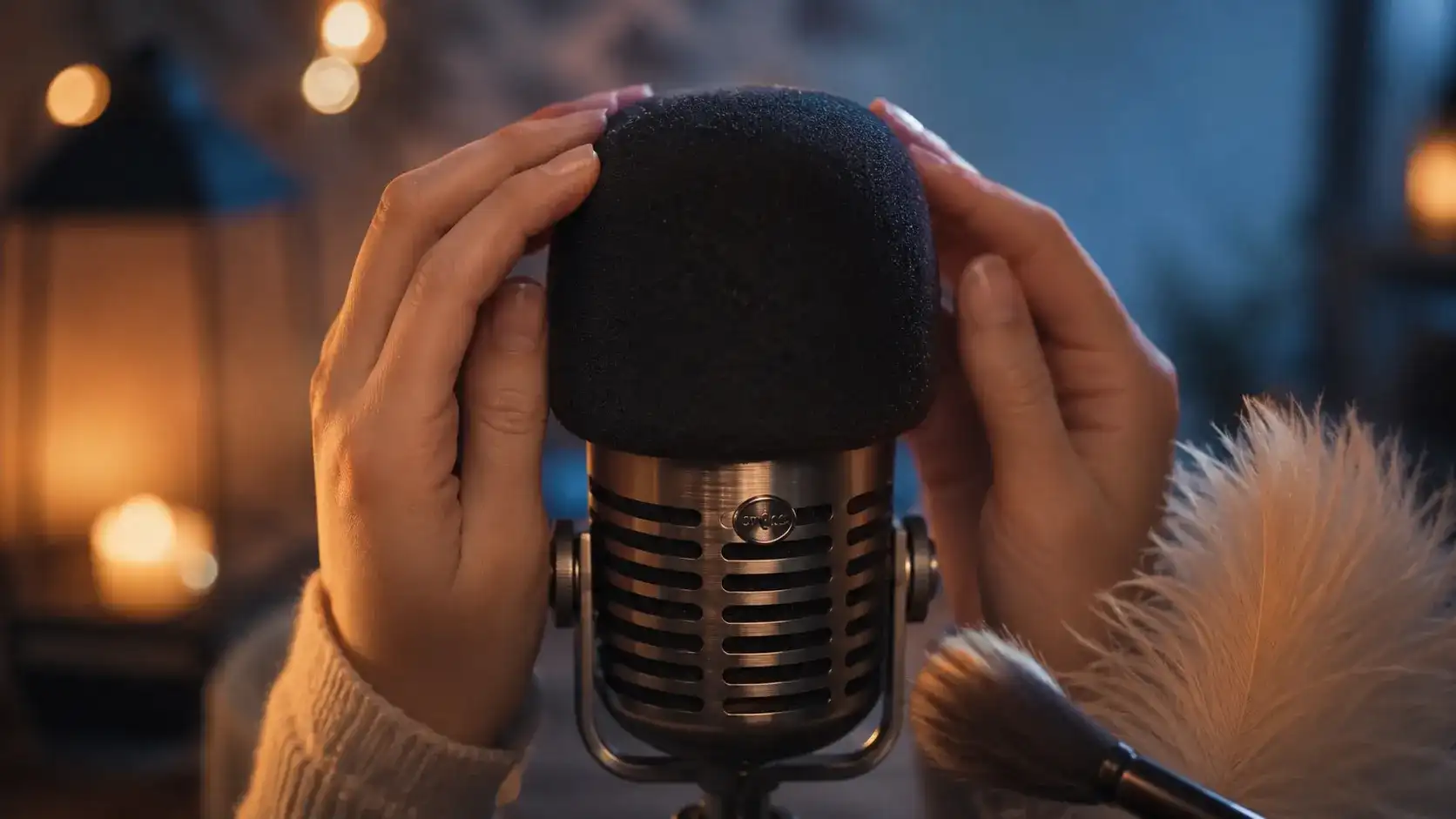
You hear whispers, taps, and soft crinkling sounds on a video, and your scalp suddenly tingles. That reaction confuses a lot of first-time viewers, and most searches for the term start with one question: what does it actually mean? This guide breaks down the true ASMR meaning in plain language, backed by real research, so you finally understand the feeling and can use it for calm, focus, or better sleep.
What Is ASMR? A Simple Definition
The ASMR meaning stands for Autonomous Sensory Meridian Response. It describes a tingling sensation that usually starts at the scalp and travels down the neck or spine. This feeling appears after specific sounds or visuals, and it often comes with a wave of calm.
Researchers Emma Barratt and Nick Davis first studied the phenomenon in 2015 and described it as a flow-like mental state, closely tied to feelings of deep relaxation. That early study gave ASMR its first real scientific grounding after years of only anecdotal reports online.
So when someone asks about the ASMR meaning, the short answer is this: it’s a real, measurable sensory-emotional response, not just internet slang.
The ASMR Meaning Behind the Acronym
Each letter in the term carries a specific idea:
- Autonomous – the response happens on its own, without conscious effort
- Sensory – it starts from a sensory input like sound, sight, or touch
- Meridian – it marks a peak or turning point in the feeling of calm
- Response – it is a reaction, not a permanent state
Put together, the ASMR meaning describes an involuntary sensory reaction that peaks into a relaxed, tingling feeling. The term was coined by Jennifer Allen in 2010 on an online forum, giving a shared name to an experience millions had already felt but never labeled.
How ASMR Triggers Work in the Brain
ASMR triggers are the sounds, sights, or actions that spark the tingling response. Your brain treats these cues as safe, gentle signals of close personal attention, similar to grooming or caregiving behavior seen across many social species.
A 2018 study published in PLOS One found that watching ASMR videos led to a lower heart rate and higher skin conductance in people who reported feeling the tingles. That combination points to a real physiological shift, not just a placebo effect or suggestion.
This matters because it confirms the ASMR meaning goes beyond a viral trend. Your nervous system genuinely responds to these triggers with measurable changes.
Common ASMR Triggers You Should Know
Not every sound produces the same response in every person. Triggers are highly individual, but certain categories show up again and again in research and viewer reports.
- Whispering or soft-spoken talking
- Tapping on wood, glass, or plastic surfaces
- Crinkling paper or packaging
- Hair brushing or scalp massage sounds
- Personal attention role-play, like a haircut or eye exam
- Slow, deliberate hand movements
- Page turning or writing sounds
- Mouth sounds, such as gentle chewing or eating
Types of ASMR Content You Can Try
ASMR content comes in several distinct formats, and understanding these helps you find what actually works for you rather than guessing.
| ASMR Type | Description | Best For |
| Whisper videos | Soft-spoken talking directly into a microphone | Falling asleep, anxiety relief |
| Roleplay videos | Simulated personal care, like a spa visit or checkup | Feeling comforted and cared for |
| Tapping and scratching | Rhythmic sounds on different textured objects | Background focus, studying |
| Unintentional ASMR | Natural, non-scripted soft sounds, like a teacher speaking quietly | Viewers who dislike staged content |
| ASMR eating (mukbang-style) | Close-up chewing and mouth sounds | Viewers seeking novelty triggers |
| Nature-based ASMR | Rain, wind, or fire sounds recorded closely | Sleep, meditation, relaxation |
| Binaural ASMR | 3D audio recorded to mimic real-life closeness | Immersive, headphone listening |
ASMR Benefits: Why People Watch and Listen
People turn to ASMR for far more than curiosity. The reported benefits line up with what current research is starting to confirm.
- Lower state anxiety before sleep or stressful events
- Improved mood and a sense of calm
- Easier time falling asleep
- Reduced muscle tension
- A feeling of comfort or connection when alone
A 2022 study in PLOS One found that ASMR videos meaningfully <cite index=”6-1″>alleviated state anxiety, but only in people who experienced the tingling response</cite> in the first place. This detail is important. ASMR benefits are real, but they depend on whether your brain responds to the triggers at all.
Does ASMR Work for Everyone?
No, and this is one of the most searched follow-up questions after “what is the ASMR meaning.” Roughly one in five people report experiencing the classic tingling sensation, according to sleep researchers. Others feel calm or relaxed without the physical tingle, while a smaller group feels nothing at all, or even mild irritation known as misophonia.
| Response Type | What They Feel | Approximate Share |
| Full ASMR responders | Scalp-to-spine tingles plus deep calm | About 1 in 5 people |
| Partial responders | Relaxation and mood lift without tingles | Common, varies widely |
| Non-responders | No noticeable reaction to triggers | Common |
| Misophonia-prone listeners | Irritation or discomfort from the same sounds | Smaller group |
If you have tried a few videos and felt nothing, you are not doing it wrong. Your nervous system simply may not register those specific triggers, and trying different trigger types often helps.
ASMR and Sleep: Can It Help With Insomnia?
This is one of the most practical reasons people search for ASMR content. Quiet, repetitive sounds slow the breathing rate and lower physical tension, both of which support the transition into sleep.
Sleep researchers note that ASMR appears to work partly by easing pre-sleep anxiety and creating a predictable, soothing routine. If your mind races at bedtime, a whisper or tapping video gives it something gentle to focus on instead of looping thoughts.
Try this approach if you want to test it tonight:
- Use headphones for the full binaural effect
- Start with whisper or tapping videos under fifteen minutes
- Keep the room dark and your phone on a stand, not in your hand
- Let the video play through even if you fall asleep before it ends
The Science Behind ASMR Tingles
Scientists still debate the exact mechanism, but current findings point toward a mix of attention, oxytocin release, and reward-related brain activity. The tingling itself appears linked to the same neural pathways involved in touch and close personal contact.
Understanding the ASMR meaning at this level helps explain why the sensation feels so intimate. Your brain may be interpreting these soft sounds and gentle visuals as a form of safe, caring attention, even though no one is physically present.
How to Start Experiencing ASMR as a Beginner
If you are new to this, a few simple steps make it easier to find what actually triggers a response for you.
- Watch with headphones in a quiet room, free of distractions
- Try at least five different trigger types before deciding ASMR isn’t for you
- Watch during a calm moment, not a stressful or rushed one
- Pay attention to physical cues like slower breathing or lighter shoulders
- Keep a short list of videos that worked so you can return to them
Common Myths About the ASMR Meaning
A few misunderstandings still follow this topic around, so it helps to clear them up directly.
- Myth: ASMR is only a sexual response. Most viewers report calm, comfort, and sleepiness, not arousal.
- Myth: It’s only for children or a niche audience. Research participants span a wide age range, and adults make up the majority of regular viewers.
- Myth: If you don’t feel tingles, it isn’t working. Many people still get real relaxation benefits without the physical tingling sensation.
- Myth: ASMR is unscientific. Multiple peer-reviewed studies now confirm measurable physiological changes.
Is ASMR Safe? Risks and Considerations
ASMR is generally considered safe for most people. It carries no known medication interactions and no reported physical risk. A small number of viewers experience the opposite reaction, irritation or unease from the same trigger sounds, which is closer to misophonia than a true ASMR response.
If a video makes you tense rather than calm, stop and try a different trigger category instead of pushing through it. ASMR should never feel forced.
FAQs
What is the simple ASMR meaning?
ASMR meaning refers to Autonomous Sensory Meridian Response, a tingling, relaxing feeling triggered by specific sounds or visuals like whispering or tapping.
Is ASMR a real, scientifically recognized phenomenon?
Yes. Multiple peer-reviewed studies have recorded measurable physical changes, including lower heart rate and reduced anxiety, in people who experience ASMR.
Why do only some people feel ASMR tingles?
Individual differences in brain wiring and sensory processing explain the gap. Roughly one in five people report the classic tingling response, while others feel calm without it.
Can ASMR replace medication for anxiety or insomnia?
No. ASMR can support relaxation and sleep habits, but it is not a substitute for medical treatment. Speak with a healthcare provider for ongoing anxiety or sleep problems.
What is the best ASMR trigger for beginners?
Whisper videos and soft tapping sounds tend to work well for first-time listeners because they are gentle and widely available.
Does ASMR content need headphones to work?
Headphones aren’t required, but they noticeably improve the effect, especially with binaural recordings designed to mimic close, real-life sound.
Final Thoughts: Understanding ASMR Meaning for Yourself
The true ASMR meaning is simple once you strip away the internet hype: a gentle, involuntary sensory response that brings real calm to the people who experience it. Whether you feel the full tingling sensation or just a quiet sense of relaxation, the science now backs up what millions of viewers already discovered on their own.
Try a few different trigger types tonight, pay attention to how your body responds, and keep the videos that work for you close at hand. Your own experience is the best test of what ASMR means for you.