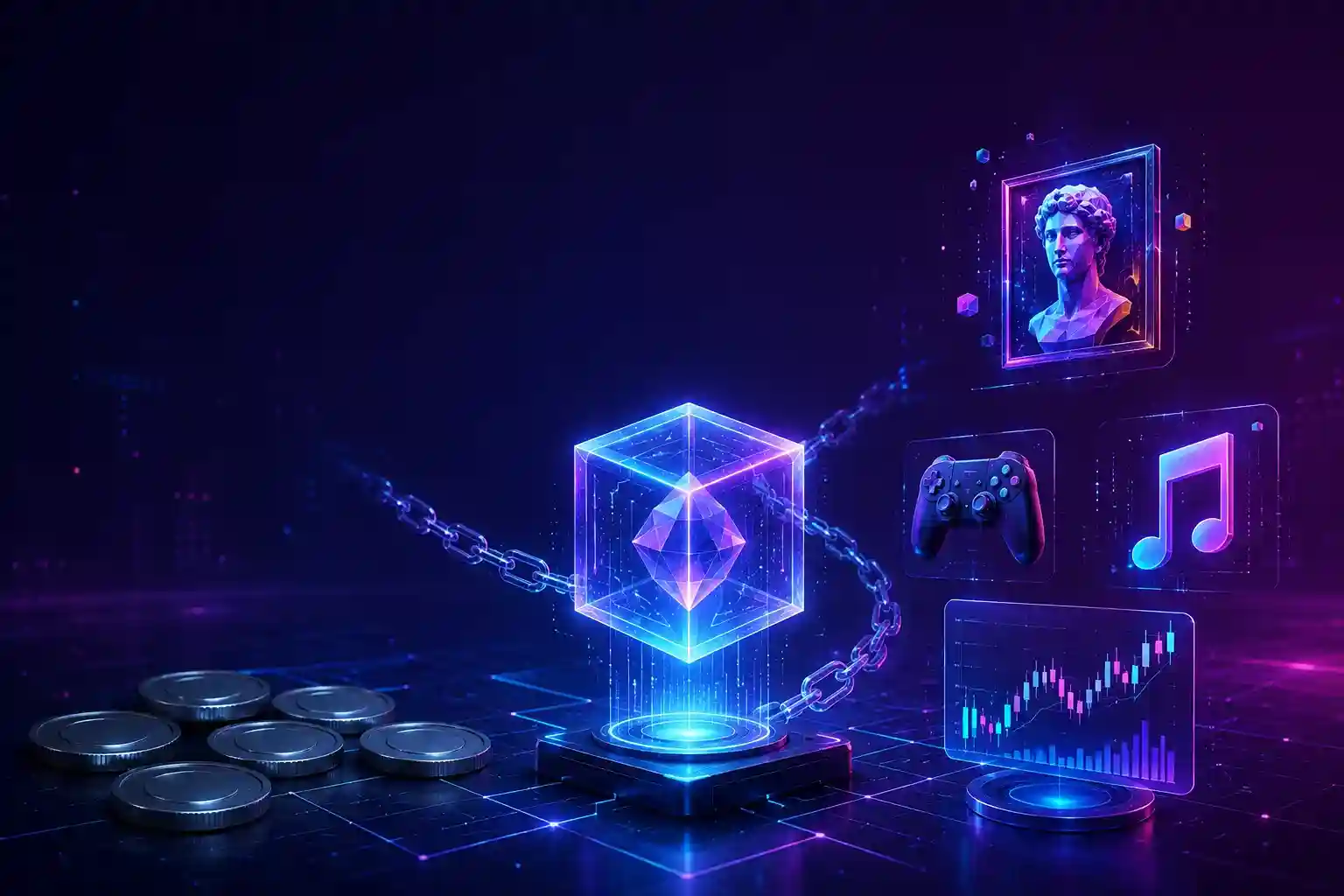
You see NFT everywhere. You hear about million-dollar sales and confusing jargon. Most guides make it worse. This page gives you the straight answer. You will learn the nft meaning in art, crypto, games, music, and trading. You will also learn how to buy, mint, and safely navigate this market. No hype. Just clear facts.
What Does NFT Stand For? A Clear Definition
The nft meaning starts with three words: Non-Fungible Token.
- Non means not.
- Fungible means replaceable.
- Token means a digital certificate on a blockchain.
A fungible item swaps evenly for another identical item. One dollar equals another dollar. One Bitcoin equals another Bitcoin. A non-fungible item is unique. The Mona Lisa does not swap for another painting.
An NFT proves you own a specific digital item. Ownership lives in a blockchain ledger. A screenshot does not give you ownership.
The Technology Behind NFTs
Understanding nft meaning crypto requires a quick look at blockchain technology.
A blockchain is a public digital record book. Thousands of computers verify every entry. No single person controls it. Each NFT stores ownership records, transaction history, and authenticity proof on this ledger.
Smart contracts power NFTs. Smart contracts are self-executing code. They transfer ownership automatically when conditions meet. Most NFTs use the Ethereum blockchain and its ERC-721 standard. Solana, Polygon, and Tezos offer faster, cheaper options. Binance Academy notes each blockchain brings different speeds, fees, and communities.
That connection gives the crypto nft meaning its depth. You typically buy NFTs with cryptocurrency. NFT prices often move with crypto market cycles.
How Digital Art Changed Forever
The art nft meaning transformed how artists create, sell, and earn.
Before NFTs, digital artists struggled. Anyone could copy a JPEG. NFTs solved that. A digital artwork now carries verifiable scarcity.
Beeple’s $69 million sale at Christie’s changed public perception. The nft meaning art shifted from niche experiment to legitimate market.
Artists gain four big benefits:
- Automatic royalties on every resale.
- Direct connection to collectors.
- Global reach around the clock.
- Proven authenticity through blockchain records.
Popular art collections include CryptoPunks, Bored Ape Yacht Club, and Art Blocks.
Slang and Everyday Language
The nft meaning slang evolved quickly as the term entered everyday language.
People now use “NFT” as shorthand for anything rare or overpriced. A friend might say, “This limited sneaker drop is basically an NFT.” Someone might joke, “My grandma’s cookie recipe is an NFT.”
The nft meaning in text conversations often signals tech-savvy status. Saying “I just minted an NFT” marks insider knowledge. Saying “That looks like an NFT” can mock garish digital art styles.
The term also carries negative connotations. “NFT bro” describes someone who hypes overpriced digital assets. Context matters.
True Digital Ownership in Games
The nft meaning in games centers on true digital ownership.
Traditional games lock items inside closed systems. You buy a Fortnite skin, but you cannot sell it. Your items disappear if the game crashes.
The nft meaning gaming model flips that. Players own in-game assets as NFTs. You can:
- Sell your NFT sword to another player for real money.
- Transfer your NFT character across compatible games.
- Keep assets even if the original game disappears.
- Earn cryptocurrency through play-to-earn mechanics.
Axie Infinity popularized this model. The Sandbox and Decentraland let players own virtual land. The core idea—players owning what they earn—remains powerful.
How Musicians Make Money
The nft meaning music opened new revenue streams for musicians.
Fractions of a cent are paid by streaming services for each play. Music NFTs offer an alternative. Artists release songs or albums as limited NFT editions.
In 2021, Kings of Leon released “When You See Yourself” as an NFT. 3LAU sold $11.6 million in music NFTs. Grimes earned over $6 million.
Music NFTs provide:
- Direct fan support.
- Royalty sharing through smart contracts.
- Exclusive access to concerts and unreleased tracks.
- Collectible value for fans.
For musicians, NFTs reduce dependence on labels. For fans, NFTs offer a way to support creators directly.
Trading and Finance Basics
The nft meaning in trading treats digital assets as speculative investments.
Traders buy low, sell high, and track market movements. OpenSea, Blur, and Rarible serve as primary trading venues. Each shows floor prices, volume, and sales data.
The nft meaning finance connects to broader crypto markets. When Ethereum rises, NFT floor prices often follow. When crypto crashes, NFT markets slow.
Key trading metrics include:
- Floor price: Lowest listed price in a collection.
- Volume: Total trading activity over a period.
- Unique holders: Number of distinct wallets owning a collection.
- Liquidity: How quickly an NFT sells near its market price.
Investopedia warns that NFT investing carries extreme risk. Prices swing wildly. Liquidity can vanish overnight.
How Minting Works
The mint nft meaning refers to creating an NFT on a blockchain.
Minting converts a digital file into a blockchain token. Once minted, the NFT becomes tradable and verifiable.
Here is how minting works:
- Choose a platform like OpenSea or Rarible.
- Connect a wallet like MetaMask.
- Upload your file.
- Set title, description, edition count, and royalty percentage.
- Pay gas fees.
- Mint the token.
Ethereum gas fees can spike during popular drops. Polygon and Solana offer near-zero minting costs. Forbes Advisor recommends comparing platform fees before committing.
Staking and Community Ownership
The staking nft meaning describes locking NFTs to earn rewards.
You deposit your NFT into a smart contract for a set period. The platform pays rewards, usually in cryptocurrency. NFT staking offers passive income and sometimes exclusive perks. Platforms like NFTX and LooksRare support staking. Locked NFTs cannot sell during the staking period, and token rewards can lose value. Research platform security before staking.
The dao nft meaning combines NFTs with decentralized governance. A DAO is a community-run organization. Members vote through tokens. No CEO controls operations.
NFT-based DAOs use NFTs as membership cards. Owning a specific NFT grants voting rights and treasury access. PleasrDAO and Flamingo DAO are well-known examples.
Benefits of NFT DAOs include:
- Collective buying power.
- Democratic control.
- Shared appreciation.
- No central authority.
Brand NFTs and Marketing
The McRib NFT meaning refers to McDonald’s 2021 promotion. The fast-food chain released limited free McRib-themed NFTs. The promotion drove massive social media engagement. McDonald’s proved NFTs work as marketing tools.
The WWE NFT meaning follows a similar path. WWE launched official wrestling NFTs featuring iconic moments and superstar trading cards. Fans collect their favorites as digital assets. These examples show NFTs extend beyond art and speculation.
How to Buy Your First NFT
Buying an NFT takes minutes after setup.
Step 1: Set up a MetaMask wallet. Write down your recovery phrase on paper.
Step 2: Fund your wallet with Ethereum from Coinbase or Kraken.
Step 3: Choose a marketplace. OpenSea hosts the largest selection.
Step 4: Research before buying. Check floor prices, volume, and holder distribution.
Step 5: Complete the purchase. Approve the transaction and pay the gas fee.
Safety tips:
- Never share your recovery phrase.
- Verify marketplace URLs.
- Avoid “too good to be true” prices.
Risks and Benefits of NFTs
NFTs offer real opportunities and serious risks.
Benefits:
- True digital ownership.
- Creator royalties on resales.
- Global access for anyone.
- Transparent ownership history.
Risks:
- Price volatility.
- Liquidity risk.
- Scams and rug pulls.
- Technical failures.
- Regulatory uncertainty.
The Federal Trade Commission warns about NFT scams. Fake marketplaces and counterfeit collections target newcomers. Never put money into an investment that you cannot afford to lose.
Complete NFT Category Table
| NFT Category | What It Means | Real Examples | Primary Use Case |
| Art NFTs | Digital artwork with verifiable ownership | Beeple, CryptoPunks, Bored Ape Yacht Club | Collection, investment |
| Gaming NFTs | In-game items, characters, land | Axie Infinity, The Sandbox | Play-to-earn, ownership |
| Music NFTs | Songs, albums, exclusive experiences | Kings of Leon, 3LAU, Grimes | Fan support, royalties |
| Collectible NFTs | Trading cards, moments, memorabilia | NBA Top Shot, WWE NFTs | Fan engagement |
| Virtual Land NFTs | Digital real estate parcels | The Sandbox, Decentraland | Building, development |
| Brand NFTs | Corporate marketing collectibles | McRib NFT, Nike CryptoKicks | Marketing, loyalty |
| DAO NFTs | Governance and membership tokens | Flamingo DAO, PleasrDAO | Community control |
| Utility NFTs | Access passes, memberships | PROOF Collective | Access, perks |
FAQs
What does NFT mean in simple words?
An NFT is a unique digital certificate stored on a blockchain. It proves you own a specific digital item, like art or a game character. Ownership cannot be copied or replaced.
Can anyone create an NFT?
Yes. You need a digital file, a crypto wallet, and a marketplace account. Minting takes minutes. Gas fees vary by blockchain.
Are NFTs a good investment?
NFTs carry high risk and high potential reward. Some collections appreciate significantly. Many lose value. Never invest more than you can afford to lose.
What does minting an NFT mean?
Minting means creating an NFT by recording a digital file on a blockchain. It converts your file into a tradable token with unique properties.
What is the difference between NFT and cryptocurrency?
Cryptocurrency is fungible—one Bitcoin equals another. NFTs are non-fungible—each token is unique. Crypto serves as money. NFTs represent ownership of specific digital assets.
Can you lose money with NFTs?
Yes. NFT prices depend on market demand. Scams, rug pulls, and market crashes cause real losses. Always research thoroughly and invest cautiously.
Final Thoughts: Your NFT Journey
You now understand nft meaning across art, crypto, gaming, music, trading, and more. The technology stands for real digital ownership. The market offers genuine opportunities alongside genuine risks.
Start small. Mint a simple NFT. Buy a low-cost item you genuinely appreciate. Join a community. Each step builds practical knowledge.