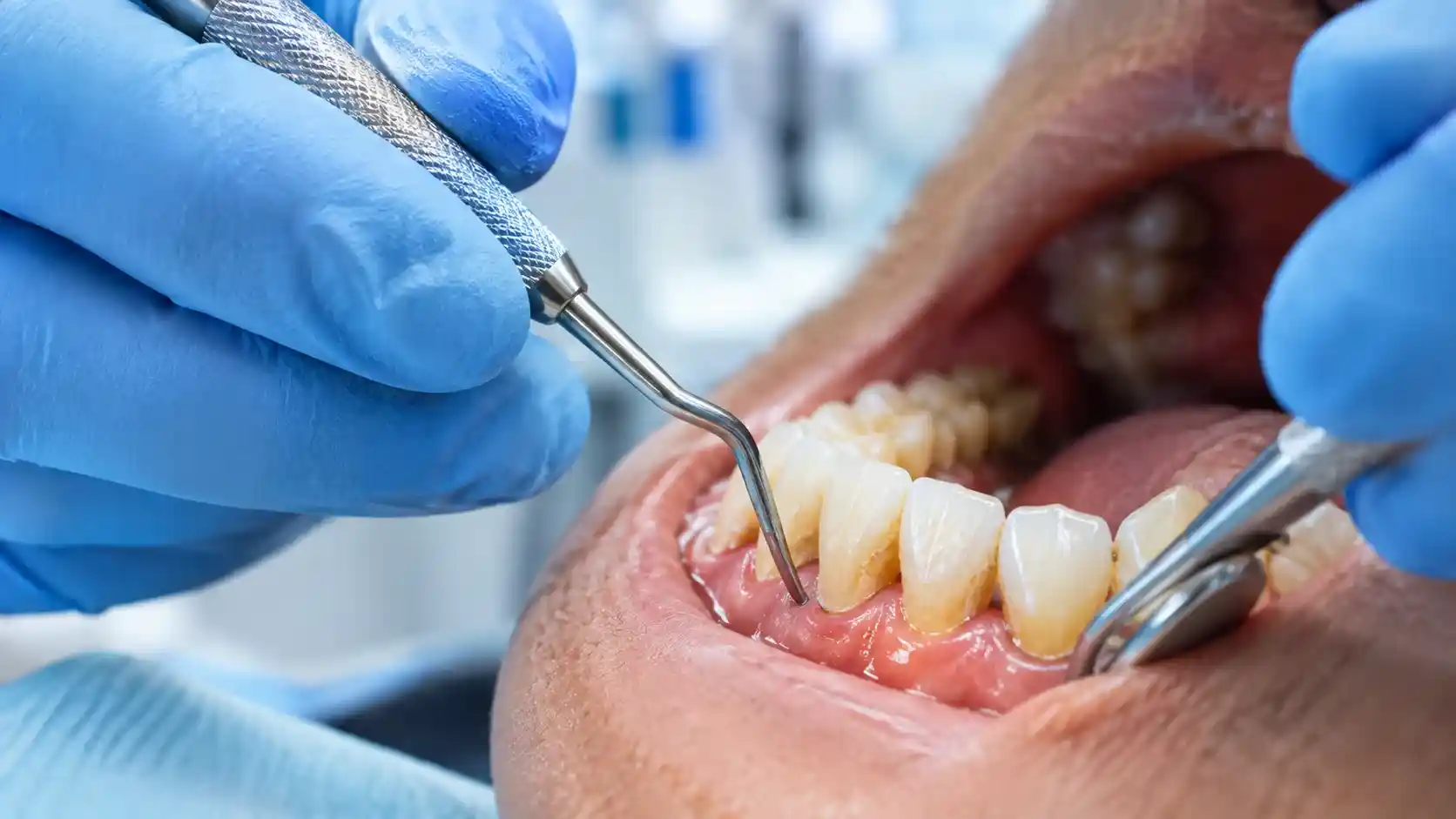
Your dentist just said you need “SRP” and moved on before explaining what it means. Now you’re guessing, worried about pain, cost, and why your gums keep bleeding. That confusion is common, and it delays treatment. Below is the real SRP dental meaning in plain language, along with the exact cost, procedure steps, and recovery timeline your dentist may not have had time to cover.
What Does SRP Mean in Dentistry?
SRP stands for Scaling and Root Planing, a two-part deep cleaning procedure used to treat gum disease. That’s the short version of SRP dental meaning, but the full picture matters more once you understand why the procedure exists.
Unlike a routine cleaning, SRP targets plaque and hardened tartar that have built up below the gumline, in the pockets between your teeth and gums. Your dentist or hygienist removes this buildup, then smooths the exposed root surfaces so your gum tissue can heal and reattach to the tooth. Grasping the SRP dental meaning early helps you ask better questions at your next appointment and avoid unnecessary anxiety about the treatment plan.
SRP Dental Meaning: Breaking Down Scaling and Root Planing
Once you know the SRP dental meaning at a high level, it helps to see how the two halves of the procedure work together. Each step targets a different part of the problem, and skipping one weakens the result.
| Term | What It Means | Purpose |
| Scaling | Removing plaque and calculus (tartar) above and below the gumline | Clears out bacteria-filled deposits |
| Root Planing | Smoothing rough spots on the tooth root | Helps gum tissue reattach and heal |
| Periodontal Pocket | The gap between tooth and gum, measured in millimeters | Shows how far disease has progressed |
| Subgingival | Located below the gumline | Where SRP focuses its cleaning |
| Debridement | Physical removal of bacterial buildup and toxins | Reduces inflammation at the root |
This table captures the core vocabulary you’ll hear at a periodontal visit, and it’s the foundation for understanding everything else on this page.
Why Dentists Recommend Scaling and Root Planing
Gum disease treatment isn’t optional once plaque hardens into tartar beneath the gumline, because a toothbrush and floss simply can’t reach it anymore. Left alone, that bacterial buildup triggers ongoing inflammation, and inflammation slowly breaks down the bone and connective tissue that hold your teeth in place.
Federal health data backs up why this matters at scale. The CDC reports that roughly four in ten U.S. adults aged 30 and older have some level of periodontitis, and the rate is even higher among men than women. When a dentist recommends scaling and root planing, they’re catching a condition that’s already common and stopping it before it advances to tooth mobility or loss.
Signs You May Need SRP Dental Treatment
Not every patient needs SRP. Dentists base the decision on measurable clinical signs, not guesswork. Watch for these gum disease symptoms between checkups:
- Gums that bleed when you brush or floss, even lightly
- Bad breath that does not go away after brushing
- Gums that peel away from the teeth or appear red or swollen
- Teeth that feel loose or shift position
- Visible tartar buildup near the gumline
- Pain or tenderness when chewing
If your dentist measures pocket depths of 4 millimeters or more, combined with bleeding or bone loss on an X-ray, SRP typically moves from “optional” to “recommended.”
Scaling vs Root Planing: What’s the Difference?
These two steps are almost always performed together, but they’re not the same action, and knowing the difference makes the appointment far less confusing.
| Aspect | Scaling | Root Planing |
| Main goal | Remove plaque and tartar | Smooth the root surface |
| Where it happens | Above and below the gumline | Below the gumline, on the root |
| Tools used | Ultrasonic scalers, hand curettes | Fine hand instruments |
| Result | Clean tooth and root surfaces | Roots that gum tissue can reattach to |
| Order | Performed first | Performed immediately after scaling |
Think of scaling as clearing the debris and root planing as preparing the surface for healing. Without the other, the task is only partially completed.
Step-by-Step SRP Dental Procedure Process
Knowing what happens in the chair removes most of the anxiety around SRP. Here’s how a typical SRP dental procedure unfolds:
- Exam and measurement. Your dentist charts pocket depths around every tooth and reviews recent X-rays.
- Local anesthesia. Local anesthesia during dental cleaning of this depth is common, since the area being treated sits below the gumline.
- Scaling. Plaque and calculus are removed using ultrasonic and hand instruments, working section by section.
- Root planing. The exposed root surface is smoothed to remove rough, bacteria-holding areas through careful root surface debridement.
- Irrigation. The pockets are flushed with an antimicrobial solution to reduce remaining bacteria.
- Follow-up scheduling. Most patients return in one to two weeks so the dentist can check healing and gum response.
Treatment is usually split by quadrant, meaning your mouth is divided into four sections, and one or two quadrants are typically treated per visit. Full-mouth cases can take two to four appointments to complete comfortably.
SRP Dental Cost: What to Expect
SRP dental cost is one of the first questions most patients ask, and pricing is almost always billed per quadrant rather than as a flat fee.
| Cost Factor | Typical Range |
| Cost per quadrant (no insurance) | $185 – $444 |
| National average per quadrant | Around $242 |
| Full mouth, 4 quadrants | $600 – $1,600 |
| Insurance coverage (when medically necessary) | Often 50% – 80% |
| Out-of-pocket cost with coverage | Roughly $75 – $200 per quadrant |
Dental insurers use specific procedure codes, D4341 for four or more teeth per quadrant and D4342 for one to three teeth per quadrant, to process SRP claims. Because the ADA classifies this treatment as therapeutic rather than preventive, plans usually require documented pocket depths or X-ray evidence of bone loss before approving payment. Ask your provider’s office to submit pre-treatment documentation early so you know your real out-of-pocket number before the appointment.
Recovery and Aftercare Following SRP
SRP recovery time is shorter than most people expect, though the first few days can feel uncomfortable. Mild soreness and tooth sensitivity are normal for one to two days, and sensitivity to hot or cold can linger for up to a week. During this window, some swelling, soreness, or little bleeding are also common.
Simple dental deep cleaning aftercare speeds up healing considerably:
- Rinse with warm salt water (one teaspoon of salt per 8 ounces of water) two to three times a day for the first few days
- Avoid hard, crunchy, or spicy foods for 24 to 48 hours
- Brush gently with a soft-bristled toothbrush, avoiding aggressive scrubbing near treated gums
- Avoid drinking and smoking for at least 48 hours because they both impede tissue recovery.
- Take any prescription painkillers or antibiotics exactly as advised.
Most patients feel back to normal within a week, with noticeably firmer, less swollen gums as inflammation settles down.
Risks, Side Effects, and Who Should Avoid SRP
SRP carries a strong safety record, but it’s still worth knowing what can happen. Short-term sensitivity, minor bleeding, and gum tenderness are common and expected. Less commonly, gums may appear slightly higher on the tooth after swelling subsides, which is the tissue returning to a healthy position rather than new damage.
Certain patients need extra precautions before treatment:
- Anyone on blood-thinning medication should tell their dentist beforehand
- Patients with specific heart conditions or joint replacements may need antibiotic premedication
- People with uncontrolled diabetes may heal more slowly and should coordinate care with their physician
- Pregnant patients can generally have SRP safely, but should confirm timing with their OB provider
A brief conversation about your full medical history before the appointment prevents nearly all complications.
SRP vs Regular Dental Cleaning (Prophylaxis)
Patients often assume SRP is just a longer version of their usual cleaning. It isn’t, and the distinction affects both your treatment plan and your insurance claim.
| Feature | Regular Cleaning (Prophylaxis) | SRP (Deep Cleaning) |
| Purpose | Preventive, for healthy gums | Therapeutic, treats existing disease |
| Depth of cleaning | Above the gumline | Above and below the gumline |
| Anesthesia | Rarely needed | Frequently used |
| Frequency | Every 6 months | As needed, based on disease severity |
| Billing classification | Preventive care | Non-surgical periodontal therapy |
If your dentist switches your recommendation from a standard cleaning to SRP, it means pocket depths or bone loss have crossed a clinical threshold that a routine cleaning can no longer address.
How Often Do You Need SRP? Maintenance Schedule
SRP isn’t a one-time fix. Bacteria repopulate periodontal pockets over time, so ongoing periodontal maintenance is what keeps results stable. Most dental teams schedule maintenance visits every three months for the first year after treatment, spacing them further apart once pocket depth and gum health remain steady across several checkups.
During each maintenance visit, your dentist rechecks pocket depth, bleeding points, and any new tartar buildup. Patients who keep these appointments consistently are far less likely to need repeat SRP on the same teeth.
Alternatives to SRP Dental Treatment
SRP isn’t the only option, and your dentist may suggest a different path depending on how far the disease has progressed.
- Standard prophylaxis is sufficient if you only have gingivitis, the earliest and reversible stage of gum inflammation
- Laser-assisted periodontal therapy can reduce bacteria with less tissue disruption in some cases
- Antimicrobial adjuncts, such as localized antibiotic microspheres, are sometimes placed directly into pockets after scaling
- Periodontal surgery, including flap procedures or grafting, becomes necessary when pockets remain deep after non-surgical periodontal therapy
- More frequent professional cleanings may suffice for mild, early-stage cases caught before significant pocket formation
Your dentist will base the recommendation on pocket measurements, X-ray findings, and how your gums respond to initial treatment.
Tips to Prevent Future Gum Disease After SRP
Protecting your investment in healthy gums takes daily effort, but the habits are straightforward:
- Use an electric or soft-bristled toothbrush to clean your teeth twice a day for two full minutes.
- Floss once a day to clear plaque between teeth before it hardens into tartar
- If your dentist suggests it, use an antibacterial mouthwash.
- Keep every periodontal maintenance appointment, even when your gums feel fine
- Avoid tobacco products, which significantly slow gum healing and raise relapse risk
- Manage blood sugar carefully if you have diabetes, since it directly affects gum health
Consistency matters more than intensity here. Small daily habits protect the results SRP worked hard to achieve.
FAQs
What does SRP stand for in dental terms?
SRP stands for Scaling and Root Planing. It’s a non-surgical, two-step deep cleaning procedure that removes plaque and tartar below the gumline and smooths tooth roots to treat gum disease.
Are thorough cleaning and SRP the same thing?
Yes. “Deep cleaning” is the common name patients use, while SRP dental meaning refers to the same clinical procedure: scaling followed by root planing to treat periodontal disease.
Does SRP hurt?
Most patients feel little to no pain during the procedure because local anesthesia numbs the treated area. Mild soreness and sensitivity for a few days afterward are normal and manageable with basic aftercare.
How much does SRP cost without insurance?
Expect roughly $185 to $444 per quadrant, with a national average near $242. A full-mouth treatment across four quadrants typically totals $600 to $1,600 before any insurance coverage.
After SRP, how long does it take for gums to heal?
Initial soreness usually fades within one to two days, and sensitivity can last up to a week. Full gum tissue healing and reattachment generally take four to six weeks.
How often should SRP be repeated?
SRP itself is typically a one-time treatment per affected area, followed by periodontal maintenance visits every three months to prevent the disease from returning to the same pockets.
Take the Next Step for Healthier Gums
You now understand the full SRP dental meaning, from the procedure itself to its cost, recovery, and long-term maintenance. Bleeding gums and deepening pockets rarely improve on their own, and every month of delay gives bacteria more time to damage the bone supporting your teeth.
Book a periodontal evaluation with your dentist, ask for your current pocket depth measurements, and take control of your gum health today.