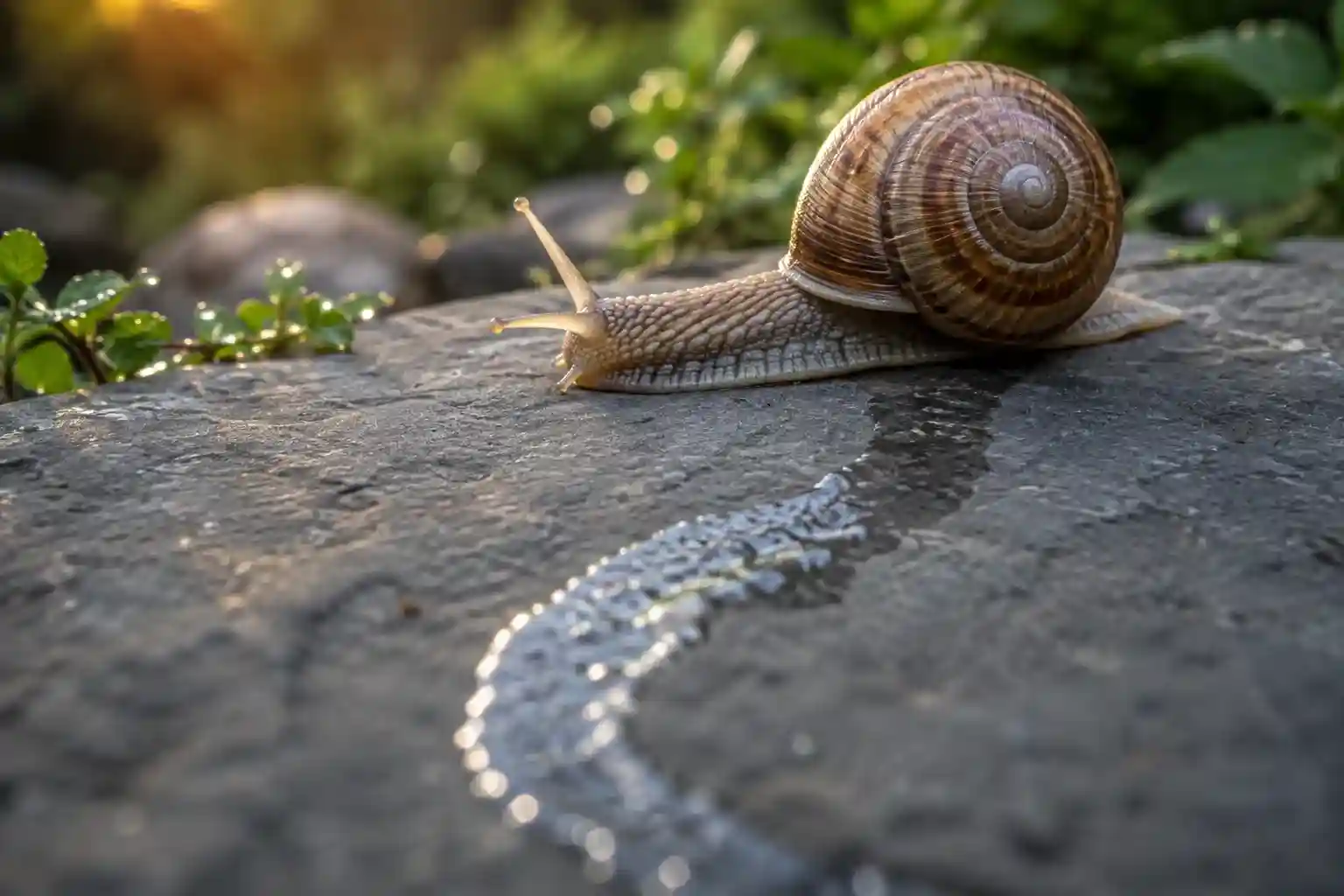
You step outside in the early morning, and there it is — a shiny, silvery line snaking across your patio, fence, or garden path. It looks almost like glitter, but it wasn’t there yesterday. That thin ribbon is a snail trail, and its meaning goes far beyond “a snail walked here.” This guide breaks down exactly what a snail trail is, why it forms, what it tells you about your garden, and when it’s actually a warning sign worth acting on.
What Is a Snail Trail, Exactly?
A snail trail is the dried or wet streak of mucus a snail leaves behind as it moves across a surface. Snails don’t have legs. They glide on a single muscular foot, and that foot constantly releases a slippery gel that lets the animal move without tearing its soft body on rough ground.
Once this mucus dries in the sun, it hardens into a thin, reflective film. That’s the shimmering line you notice on stone, glass, or leaves. In simple terms, the snail trail meaning is this: it’s a physical record of where a snail has traveled, made from a substance the animal produces almost non-stop while it’s active.
| Feature | Detail |
| What it’s made of | Mucus (water, proteins, sugars, and salts) |
| Where it comes from | A gland near the snail’s mouth, spread by its foot |
| Appearance when wet | Clear, slightly thick, and sticky |
| Appearance when dry | Silvery, shiny, and flaky |
| Typical width | A few millimetres, matching the width of the snail’s foot |
| How long it lasts | A few hours to a couple of days, depending on weather |
| Is it harmful? | Generally harmless to humans; rarely a mild allergy trigger |
| Where you’ll find it | Sidewalks, walls, plant leaves, glass, tree bark, soil |
Why Do Snails Leave a Trail At All?
Every snail trail exists because of one simple biological need: movement. A snail’s foot ripples in small waves, and the mucus underneath reduces friction so those waves can push the body forward. Without this slime, a snail would essentially be stuck.
But the true snail trail meaning covers more than transportation. Researchers who study gastropods have found that this mucus serves several jobs at once:
- Locomotion – it lets the snail glide over rough or sharp surfaces without injury.
- Protection – it forms a barrier between soft tissue and harmful ground bacteria.
- Moisture retention – it helps prevent the snail’s body from drying out in the sun.
- Communication – it carries scent cues that other snails can detect.
- Defense – some trail mucus is unpleasant enough to discourage small predators.
So the next time you see that glossy line, remember it’s doing several jobs for the snail, not just marking a path.
The Science Behind Snail Slime
Snail mucus is a gel, not a simple liquid. It’s built from long protein chains called glycoproteins, mixed with water and trace minerals. This structure gives it two unusual qualities at the same time: it behaves like a lubricant when the snail pushes forward, and like a glue when the snail needs to grip a vertical wall or ceiling.
That dual nature is what allows a garden snail to crawl straight up a brick wall without falling. The mucus grips the surface just enough to hold body weight, then releases smoothly as the foot’s muscles ripple forward. It’s a small piece of natural engineering that took millions of years to develop.
Snail Trail Meaning in Everyday Language
Outside of biology, people also use the phrase in casual or slang conversation, so it helps to know the different contexts:
- Literal meaning – the physical slime line left by a real snail (the most common and searched meaning).
- Descriptive/visual meaning – any faint, winding streak that resembles a snail’s path, such as a smudge on glass or a thin water stain.
- Informal slang – in some casual or adult conversation, the phrase is used as a crude metaphor unrelated to actual snails.
For most readers searching this topic, the answer they want is the literal, natural-world explanation — which is the focus of this guide.
How to Tell a Snail Trail From a Slug Trail
Snails and slugs are close cousins, and their trails look almost identical at first glance. A few small details help you tell them apart.
| Clue | Snail Trail | Slug Trail |
| Trail width | Narrower, matching a smaller foot | Slightly wider in many species |
| Trail pattern | Often continuous and smooth | Sometimes broken or dotted |
| Nearby evidence | A shell fragment or the snail itself nearby | No shell, softer body may be visible |
| Common location | Walls, fences, tree trunks | Soil, mulch, low-lying leaves |
| Typical time seen | Early morning or after rain | Night and early morning |
If you see the actual creature, the shell is the giveaway. No shell means you’re almost certainly looking at a slug.
Why You’re Seeing More Trails After Rain
Rain plays a huge role in when a snail trail appears. Snails are most active in cool, damp conditions because moisture keeps their bodies from drying out and makes it easier to produce slime. That’s why gardens often show a fresh network of shiny lines the morning after a storm.
Dry, hot weather has the opposite effect. Many snails retreat into their shells and seal the opening with a dried layer of mucus called an epiphragm, waiting for damp conditions to return before venturing out again.
What a Snail Trail Tells You About Your Garden
A visible trail is more than décor — it’s useful information for anyone growing plants.
- Fresh, wet trails suggest snails were active in your garden overnight and may still be nearby.
- A dense network of trails around one plant usually points to repeated feeding on that spot.
- Trails leading to damaged leaves with irregular holes confirm snails as the cause, rather than caterpillars or other pests.
- Trails on pots, hoses, or garden furniture show snails are exploring beyond plants, often searching for shelter or moisture.
Reading these signs early lets you act before the damage spreads to your entire flower bed or vegetable patch.
Is Snail Slime Dangerous to Touch?
For the average person, dried or fresh snail slime is not dangerous. It isn’t toxic, and it simply flakes away or washes off with water. That said, a few precautions are worth knowing:
- People with mollusk-related allergies may experience mild skin irritation.
- In tropical and subtropical regions, certain snail species can carry parasites, so washing hands after contact is a sensible habit.
- Pets that lick or chew on snails face a higher risk than someone who simply touches a dried trail.
Basic hygiene — washing your hands after gardening — removes almost all of the minor risk involved.
How to Remove Snail Trails From Surfaces
Cleaning up dried slime is straightforward once you know the trick: don’t scrub it dry, since that can smear it further.
- Dampen the area first with plain water to soften the dried mucus.
- Wipe gently with a cloth or paper towel rather than scrubbing hard.
- Rinse thoroughly to lift any remaining residue.
- Use a mild vinegar solution on stubborn glass or tile marks, then rinse again.
- Dry the surface with a clean cloth to avoid new streaks.
For fabric or upholstery, a small amount of dish soap in warm water usually lifts the mark without staining.
How Snails Use Trails to Find Mates and Food
One of the more fascinating parts of snail trail meaning involves communication. Land snails are mostly hermaphrodites, meaning each snail has both male and female reproductive organs, and they often locate potential mates by following each other’s scent trails. Before mating, two snails may spend hours touching antennae and tasting each other’s mucus.
Some predatory snail species take this a step further, tracking the slime trail of prey species to hunt them down. In this sense, a single glistening line on your patio might represent a search for food, a search for a mate, or simply a snail heading home to a familiar shelter.
Preventing Snail Trails and Snail Damage in Your Garden
If trails and leaf damage are becoming a regular problem, a few simple changes reduce snail activity without harsh chemicals.
- Water plants in the morning instead of the evening so soil dries out before dusk, when snails are most active.
- Clear away dead leaves, boards, and debris that offer daytime shelter.
- Place copper tape around pots or raised beds; the mild reaction with snail slime discourages crossing.
- Set out shallow traps, such as a dish of beer sunk into the soil, to lure snails away from prized plants.
- Introduce natural predators like birds and ground beetles by keeping a varied, pesticide-light garden.
Small, consistent changes usually work better than a single aggressive treatment, since snail populations rebuild quickly if conditions stay favorable.
Snail Trail Meaning: A Quick Comparison Table
| Question | Short Answer |
| What is a snail trail? | Dried or wet mucus left behind as a snail moves |
| Why is it shiny? | Light reflects off the smooth, gel-like dried mucus |
| Is it the same as slug trail? | Very similar, but usually narrower and near shell fragments |
| Does it mean snails are nearby? | Yes, especially if the trail still looks wet |
| Can it damage surfaces? | No permanent damage; it wipes away with water |
| Does weather affect trails? | Yes, more trails appear after rain or in damp mornings |
Conclusion: What This Silvery Line Is Really Telling You
A snail trail is a small, everyday clue about the hidden life happening in your garden overnight. It shows you where a snail has traveled, hints at how active your local snail population is, and even carries messages between snails you’ll never see directly. Once you understand the full snail trail meaning, that shiny streak stops looking like a mystery and starts looking like useful information you can act on.
Next time you spot one, take a closer look at where it leads. Check nearby leaves for damage, note whether it appeared after rain, and use the tips above to protect your plants without reaching for harsh chemicals. Have a snail trail question we didn’t cover? Drop it in the comments, and we’ll help you figure out exactly what it means.
FAQs
1. What does a snail trail actually mean?
A snail trail means a snail has physically crawled across that surface, leaving behind mucus from its foot. The trail itself is simply dried slime, and its presence tells you a snail was active in that spot recently, often overnight or after rain.
2. Why do snail trails look silver or shiny?
The shine comes from how light reflects off the dried, gel-like layer of mucus. Fresh, wet slime looks clear, but as it dries in the sun it hardens into a thin, glassy film that catches light at certain angles, creating that familiar silvery look.
3. How long does a snail trail last on concrete or glass?
Most trails last anywhere from a few hours to two or three days, depending on humidity, sunlight, and rainfall. Direct sun and dry air speed up evaporation, while shaded, damp areas keep the trail visible longer before it flakes away naturally.
4. Is it safe to touch a snail trail with bare hands?
Yes, touching dried or fresh snail slime is generally safe for most people. It isn’t toxic, though washing your hands afterward is still a good habit, particularly for anyone with a known mollusk allergy or in regions with snail-borne parasites.
5. Do snail trails always mean garden damage is coming?
Not always. A trail simply shows a snail passed through the area. Damage only follows if the snail feeds on nearby plants, so check leaves for holes or ragged edges before assuming your garden is at risk.
6. What’s the difference between a snail trail and a slug trail?
Both trails are made of similar mucus, but snail trails tend to be narrower and are often found near a visible shell or shell fragment. Slug trails can appear wider or more broken and are more common on soil and low foliage.