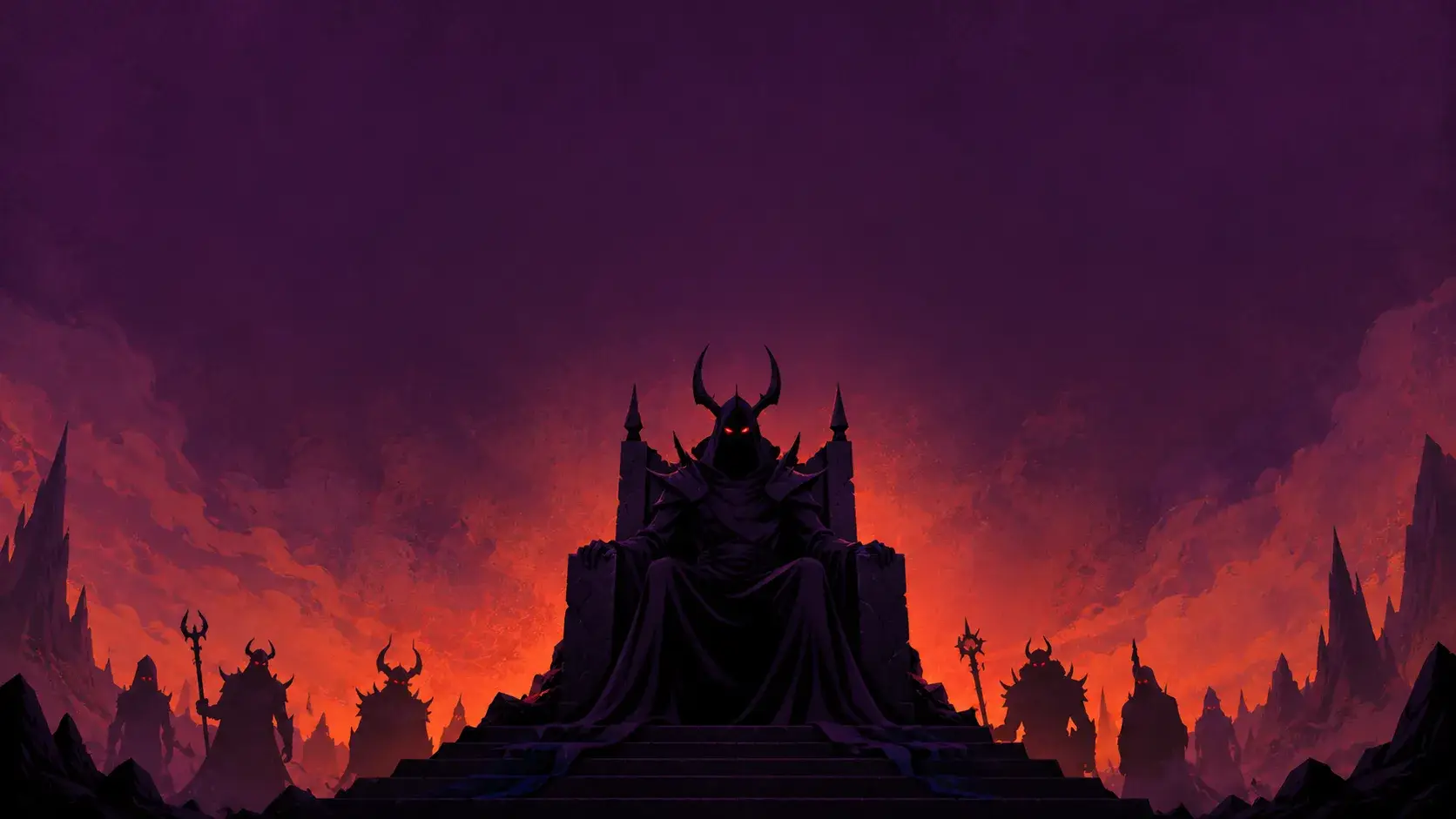
When you see “BBEG” on a Dungeons & Dragons forum or Discord chat, the statement becomes nonsensical. Scrolling past feels wrong, but asking out loud feels worse. That confusion ends right here. This guide breaks down the exact bbeg meaning, traces where the term came from, and shows you real examples so you can use it correctly in your next game or story.
What Does BBEG Mean? (Quick Definition)
BBEG stands for “Big Bad Evil Guy” (sometimes written as “Big Bad Evil Gal” or “Big Bad End Guy”). It refers to the main villain of a story, video game, or tabletop campaign — the one character every other threat leads back to.
The bbeg meaning is simple once you break it down:
- Big — their power and influence reach far beyond a single fight.
- Bad — they cause the core conflict of the story.
- Evil — their goals harm the hero, the world, or both.
- Guy — a placeholder word for “character,” regardless of gender.
Players use the term to skip long descriptions. Instead of saying “the final villain who has been secretly running the plot,” they just say “the BBEG.”
BBEG Meaning: The Full Breakdown
The bbeg meaning goes beyond a simple villain label. A true BBEG carries three traits that separate them from a random enemy on the road.
- They drive the plot. Every major event traces back to their decisions.
- They appear at the climax. The story builds toward a direct confrontation with them.
- They outlast smaller threats. Minions, traps, and side villains all work for their larger goal.
A random bandit is not a BBEG. A cult leader secretly controlling the kingdom, pulling every string from the shadows, fits the bbeg meaning perfectly.
Where Did the Term BBEG Come From? History and Origin
The roots of BBEG trace back to television before gaming ever picked it up. The TV series Buffy the Vampire Slayer popularized “Big Bad” in the late 1990s to describe the season’s central villain<cite index=”2-1″>, a major recurring adversary and usually the chief antagonist in a broadcast season of a series</cite>.
Tabletop gamers then adapted the phrase for their own use. The abbreviation was first used by a Dungeons & Dragons forum user named “trollbill” in 2001, according to online records, turning it into a shorthand phrase for campaign villains.
From there, the term spread across the wider gaming world:
- 2001–2005: Mostly used in D&D forums and message boards.
- 2006–2015: Adopted by video game communities and fan wikis.
- 2016–present: Common across Discord servers, TikTok, X (formerly Twitter), and fantasy fiction spaces.
The word “Big” in BBEG links directly back to that original Buffy usage, even though most gamers today have no idea the term started on a TV show.
Why Do Gamers and Writers Use BBEG Instead of “Villain”?
Short answer: “Villain” is too broad. BBEG points to one specific character — the top threat, not just any bad guy.
A story can hold many villains: a corrupt guard captain, a lying merchant, a rival adventurer. None of them count as the BBEG unless they sit at the top of the conflict. This distinction gives writers and players a fast way to separate the main threat from the noise around it.
This precision matters most in group settings. When a Dungeon Master says “the BBEG shows up next session,” every player instantly knows the stakes just rose.
BBEG vs Other Villain Terms
The gaming and writing world uses several villain-related terms, and mixing them up causes real confusion. Here is how each one compares to the bbeg meaning.
| Term | What It Means | Example | Appears At |
| BBEG (Big Bad Evil Guy) | The main, overarching villain of the full story or campaign | A lich secretly controlling a kingdom | Story climax |
| Big Bad | TV/film version of BBEG; season-long antagonist | A season’s main threat in a serialized show | Season finale |
| Final Boss | The last fight in a video game, tied to game mechanics | The last enemy encounter before the credits | End of the game |
| Mini-Boss | A tough enemy guarding a smaller section of the story | A dungeon guardian before the main hall | Mid-story |
| Mook | A weak, disposable enemy with no real backstory | A generic foot soldier | Anywhere |
| Anti-Villain | A “bad man” having a sympathetic or comprehensible motivation | A villain trying to save their own people | Varies |
A BBEG can also be a Final Boss, but not every Final Boss earns the BBEG label. A Final Boss might just be a strong monster with no real story tie to the plot, while a BBEG always shapes the narrative from the very first chapter.
How to Identify a True BBEG in a Story or Game
Short answer: Ask whether removing the character would collapse the entire plot. If yes, that character is the BBEG.
Use this quick checklist:
- Does the character’s goal drive most of the major events?
- Do the heroes’ choices exist mainly as reactions to this character?
- Does the story build toward a direct confrontation with them?
- Do they control or influence the smaller villains in the story?
- Would the conflict lose its point without them?
If a character checks three or more boxes, the BBEG label applies directly to them.
Famous BBEG Examples From Games, Books, and Movies
Seeing the term in action makes the bbeg meaning click faster than any definition alone. Below are widely recognized examples across different media.
| Character | Source | Why They Fit the BBEG Role |
| Sauron | The Lord of the Rings | His return drives the entire trilogy’s plot |
| Voldemort | Harry Potter series | His actions shape every book from start to finish |
| Ganon | The Legend of Zelda franchise | The recurring end-game threat across the series |
| Darth Vader / Emperor Palpatine | Star Wars original trilogy | The central threats behind the rebellion’s struggle |
| Strahd von Zarovich | Curse of Strahd, a Dungeons & Dragons module | A classic tabletop BBEG built for a single campaign |
These characters share one trait: removing them would remove the reason the story exists in the first place. That test alone captures the bbeg meaning better than any dictionary line.
How to Use BBEG in a Sentence
The term works best in casual, gaming-related conversation. Here are natural examples:
- “Our party finally reached the BBEG after six months of sessions.”
- “That plot twist reveals who the real BBEG has been all along.”
- “The BBEG in this game has three phases, so save your potions.”
- “My boss is basically the BBEG of my Monday mornings.”
That last example shows how far the term has stretched. People now use it jokingly outside of gaming, applying it to a strict manager, a tough exam, or any obstacle that feels like a final showdown.
How to Create a Strong BBEG for Your Own Campaign or Story
Writers and Dungeon Masters often search for the bbeg meaning because they want to build one, not just recognize one. A memorable BBEG needs more than raw power.
Give them a clear motive. A BBEG chasing an understandable goal, even a twisted one, feels far more real than a villain who is evil for no reason.
Connect them to the heroes early. Drop hints of their influence long before the final confrontation. Players should feel their presence build over time.
Build a real threat, not a stat block. Strong dialogue, smart decisions, and believable reactions matter more than high numbers on a character sheet.
Design a memorable base. A BBEG’s lair or headquarters should reflect their personality and serve as the stage for the final showdown.
Plan for player choices. A skilled BBEG adapts when the heroes try something unexpected, instead of following a fixed script.
Common Mistakes Writers Make With Their BBEG
Even experienced writers slip up when building this kind of villain. Watch for these issues:
- Introducing them too late. A BBEG who shows up in the final chapter with no buildup feels hollow.
- Giving them no personal stakes. A villain with nothing to lose rarely feels threatening.
- Making them all-powerful with no flaw. Heroes need a real, believable path to victory.
- Skipping their motivation. Random cruelty is far less compelling than a clear, driving goal.
- Forgetting their impact on minor characters. A strong BBEG shapes the whole world, not just the main hero.
Avoiding these mistakes keeps a BBEG memorable long after the story ends.
BBEG in Pop Culture and Internet Slang Today
The bbeg meaning has moved well past tabletop games. Streamers use it during boss fights. Fantasy readers use it in book reviews. Social media users apply it to anything that feels like a final challenge, from a difficult final exam to a demanding project at work.
This spread happened because the term fills a real gap in everyday language. English never had one short word for “the main antagonist behind everything,” so BBEG filled that space and stuck.
FAQs
1. What does BBEG stand for?
BBEG stands for “Big Bad Evil Guy,” sometimes written as “Big Bad Evil Gal.” It refers to the main villain of a story, game, or campaign.
2. Is BBEG only used in Dungeons & Dragons?
No. Although it originated in D&D forums, the phrase is now used in video games, books, fan fiction, and casual discussions about difficult final challenges.
3. Can a BBEG be a woman?
Yes. Many fans read “Guy” as gender-neutral, and the alternate phrase “Big Bad Evil Gal” exists specifically for female antagonists.
4. What is the difference between a BBEG and a final boss?
A final boss is the last fight in a video game. A BBEG is the character whose goals shape the entire plot, whether or not they appear as a literal “boss fight.”
5. Where did the term BBEG originally come from?
It grew out of “Big Bad,” a phrase popularized by the TV series Buffy the Vampire Slayer, then got shortened into BBEG on Dungeons & Dragons message boards around 2001.
6. Can a story have more than one BBEG?
Usually not at the same time. A story can have several villains, but only one typically holds the true BBEG role — the one whose defeat resolves the central conflict.
Final Thoughts: The Real BBEG Meaning
The bbeg meaning comes down to one clear idea: the main villain whose goals shape the entire story, game, or campaign. It started as tabletop shorthand, borrowed from a 1990s TV phrase, and grew into a term used across gaming, fiction, and everyday conversation.
Next time this acronym shows up in your feed or your gaming group, you will know exactly what it means and how to use it with confidence. Drop a comment with your favorite BBEG from a game or book — the list of legendary villains is far from finished.